
Log in with your work email address and password.
Topics included in this course: reproductive health, bloodborne pathogen refresher, hazardous waste review, chemical hygiene updates, Narcan and fentanyl, heat stress refresher, and respiratory protection refresher.
Staff may leave the training after completing the appropriate portion for their job duties.
 Dates:
10/14/2026 9am to 12pm A link to the online training will be sent to registered attendees prior to the class.
Dates:
10/14/2026 9am to 12pm A link to the online training will be sent to registered attendees prior to the class.
 Location:
Online
Location:
Online
 Status:
38 open seats left
Status:
38 open seats left
 Dates:
Please place your name on the wait list to gauge student demand to schedule future classes.
Dates:
Please place your name on the wait list to gauge student demand to schedule future classes.
 Credits:
8 CE Contact Hours
Location:
TBD
Status:
107 wait spaces available
Credits:
8 CE Contact Hours
Location:
TBD
Status:
107 wait spaces available
 Dates:
Please place your name on the wait list to gauge demand to schedule future classes.
Credits:
6 CE Contact Hours
Location:
TBD
Status:
175 wait spaces available
Dates:
Please place your name on the wait list to gauge demand to schedule future classes.
Credits:
6 CE Contact Hours
Location:
TBD
Status:
175 wait spaces available

A large portion of the course focuses on an introduction to instrumental techniques commonly used in forensic labs, with an eye towards teaching attendees to choose the right analytical technique for each sample. The basics of chromatography, infrared spectroscopy, and mass spectrometry will be covered.
Dates:
Please add your name to the waitlist so we can gauge student demand and schedule future classes.
Credits:
16 CE Contact Hours
Location:
TBD
Status:
161 wait spaces available
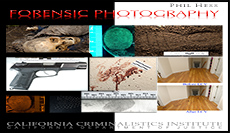
Lessons in the history and use of imagery, photography and legal decisions related to the admissibility of photographs. The basics of exposure including ISO, shutter speed, aperture, depth of field, light metering, filters, tripods, and the use of various artificial lights.
This 5-day course will focus on the best photographic techniques, tools and equipment for photographing firearms, tools, toolmarks, and ammunition components commonly encountered in forensic casework.
Students will learn a variety of lighting techniques for photographing firearm/toolmark evidence including LED, fluorescent, electronic flash, polarized light, cross polarized light, darkfield illumination, transillumination, and infrared
light.
Students will create casts of tools and firearm components to photo document the presence or absence of subclass characteristics. They will examine and photograph pieces of metal that have been machined by a variety of methods commonly used to manufacture tools and firearm components. These reference photos can be used throughout their career to identify machining methods observed on items encountered in casework.
Using their SLR with a macro lens and a comparison microscope, students will photograph bullets of various calibers and designs which have been fired through a variety of common building materials and vehicle components. These
reference photographs can be used to aid in determining potential materials observed on evidence bullets in future casework.
Students will use provided Infrared camera equipment to photograph gunshot residue patterns on dark colored clothing. They will also learn how to photo document bullet impact sites in various surfaces using several chemicals and how to photo document trajectory paths using the probe and string method and laser method.
Click here for a printable course description.
Dates:
Putting your name on the waitlist allows us to gauge student demand for the class.
Credits:
40 CE Contact Hours
Location:
CCI Sacramento
Status:
147 wait spaces available
 Dates:
Please add your name to the waitlist for the academy so we can gauge student demand.
Credits:
1 CE Contact Hours
Location:
CCI Sacramento
Status:
189 wait spaces available
Dates:
Please add your name to the waitlist for the academy so we can gauge student demand.
Credits:
1 CE Contact Hours
Location:
CCI Sacramento
Status:
189 wait spaces available

Click here for a printable course description.
Dates:
Please place your name on the wait list to become eligible for our next online offering.
Credits:
3 CE Contact Hours
Location:
Online
Status:
172 wait spaces available
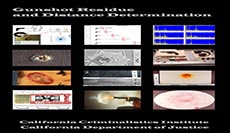
The following topics will be covered:
History of processing items for distance determination Current literature relating to distance determination and GSR pattern testing Documentation techniques (traditional and digital) for processing evidence items Preparation of chemicals and reagents to be used in analyzing items for GSR patterns Evaluation of different paper types available for the Modified Griess Test Cleaning techniques for removing blood from materials Variability in patterns based on type of firearm used, material the pattern is on, angles of the firearm and material when the firearm discharged Examining the variability in ammunition styles including Lead-Free ammunition Evaluation of possible scenarios based on the examination and analysis of the evidence Report writing styles and range of conclusions and Incorporating uncertainty into Distance Determination to meet ANAB standards.
Students will process items of mock evidence and document their findings using: Modified Griess test Sodium Rhodizonate test Dithiooxamide test Conventional photography Infrared photography Microscopy and worksheets and notes.
Dates:
Please add your name to the waitlist so we can determine student demand and schedule future classes.
Credits:
40 CE Contact Hours
Location:
TBD
Status:
115 wait spaces available
Topics include the handling and interpretation of challenging sample types, an overview of CODIS and offender databasing operations, and interfacing probabilistic genotyping with CODIS.
The course also covers important considerations for presenting DNA evidence in court, including how complex results are communicated and evaluated in a legal setting. In addition, participants will be introduced to investigative applications and emerging DNA technologies that are becoming increasingly relevant in the field.
This STR course offers a practical, forward-looking approach for those wanting to stay up to date with the latest developments in forensic DNA analysis.
Dates:
Please add your name to the waitlist so we can gauge student demand and schedule future classes.
Credits:
24 CE Contact Hours
Location:
Online
Status:
161 wait spaces available
This class will demonstrate how to handle a case involving ignitable liquids and/or fire debris from start to finish. It will address how to get started, how to recover analyte from fire-related debris samples, how to identify common ignitable liquids using GCMS, how to process and interpret analytical data, how to form and evaluate conclusions, and how to generate a report. Practical laboratory exercises will be emphasized. Evidence storage and safety considerations will also be addressed.
This course is intended for criminalists and forensic scientists employed by law enforcement or public safety agencies who currently perform or will be performing analysis of ignitable liquids and debris from fire scenes.
Click here for a printable course description.
Dates:
Putting your name on the wait list allows us to gauge student demand.
Credits:
32 CE Contact Hours
Location:
TBD
Status:
154 wait spaces available
 Dates:
Please add your name to the waitlist so we can gauge student interest in order to schedule more classes.
Credits:
16 CE Contact Hours
Location:
TBD
Status:
138 wait spaces available
Dates:
Please add your name to the waitlist so we can gauge student interest in order to schedule more classes.
Credits:
16 CE Contact Hours
Location:
TBD
Status:
138 wait spaces available
 Dates:
Please add your name to the wait list so we can gauge student demand and schedule future classes.
Credits:
24 CE Contact Hours
Location:
TBD
Status:
148 wait spaces available
Dates:
Please add your name to the wait list so we can gauge student demand and schedule future classes.
Credits:
24 CE Contact Hours
Location:
TBD
Status:
148 wait spaces available
| Category | Course ID | Course Number | Course name | Start Date Time | Location | Description | Instructors Name | Start Date | End Date | ||
|---|---|---|---|---|---|---|---|---|---|---|---|
| Health and Safety/Safety/~ | 5278 | H103w | Annual Safety Refresher - Online | 10/14/2026 9am to 12pm A link to the online training will be sent to registered attendees prior to the class. | Online |
|
This course is for BFS personnel only.
Topics included in this course: reproductive health, bloodborne pathogen refresher, hazardous waste review, chemical hygiene updates, Narcan and fentanyl, heat stress refresher, and respiratory protection refresher. Staff may leave the training after completing the appropriate portion for their job duties. |
Instructor TBD | 10/14/2026 | 10/14/2026 | |
| Professional Development/General/~ | 2871 | A130 | Ethics in Forensic Science | Please place your name on the wait list to gauge student demand to schedule future classes. | TBD |
|
This one-day (eight-hour) course focuses on the practical application of forensic science ethics codes to ethical dilemmas encountered in forensic science. The course provides tools to readily access the content of over three dozen forensic science ethics documents from around the world. Lecture materials offer insight into the role of morals, purposes of ethics documents, character traits that could factor into unethical conduct, historical background and enforcement policies, encountering unethical conduct, filing an ethics complaint, being the subject of an ethics allegation, the role of ethics in cognitive bias, lawyer’s ethics, and discovery rules. Attendance is limited to 12 students per session. Click here for a printable course description. |
Greg Matheson | 1/1/2030 | 1/1/2030 | |
| Chemistry/Controlled Substances/~ | 2878 | C133w | Principles of Analytical Chemistry | Please add your name to the waitlist so we can gauge student demand and schedule future classes. | TBD |
|
This online course will introduce attendees to the critical concepts needed to analyze samples properly. Attendees will learn strategies for optimizing analyses, how to correctly perform representative sampling, and the importance of reporting results with the correct number of significant figures. Students will learn the difference between precision and accuracy, and how to measure and minimize error, discussions of proper calibration practice, and how to understand the statistics used in chemical analysis. A large portion of the course focuses on an introduction to instrumental techniques commonly used in forensic labs, with an eye towards teaching attendees to choose the right analytical technique for each sample. The basics of chromatography, infrared spectroscopy, and mass spectrometry will be covered. Click here for a printable course description. |
Brian Smith | 1/1/2030 | 1/1/2030 | |
| Professional Development/General/~ | 2891 | A132w | Ethics in Forensic Science for Managers and Supervisors | Please place your name on the wait list to gauge demand to schedule future classes. | TBD |
|
This six-hour course focuses on two main concepts: ethical behavior considerations for those in a leadership role and how to foster and promote an ethical environment in a forensic science laboratory. Click here for a printable course description. |
Greg Matheson | 1/1/2030 | 1/1/2030 | |
| Firearms and Impressions/Photography/~ | 2945 | E104 | Digital Imaging for Firearm and Toolmark Examiners | Putting your name on the waitlist allows us to gauge student demand for the class. | CCI Sacramento |
|
Lessons in the history and use of imagery, photography and legal decisions related to the admissibility of photographs. The basics of exposure including ISO, shutter speed, aperture, depth of field, light metering, filters, tripods, and the use of various artificial lights. This 5-day course will focus on the best photographic techniques, tools and equipment for photographing firearms, tools, toolmarks, and ammunition components commonly encountered in forensic casework. Students will learn a variety of lighting techniques for photographing firearm/toolmark evidence including LED, fluorescent, electronic flash, polarized light, cross polarized light, darkfield illumination, transillumination, and infrared Students will create casts of tools and firearm components to photo document the presence or absence of subclass characteristics. They will examine and photograph pieces of metal that have been machined by a variety of methods commonly used to manufacture tools and firearm components. These reference photos can be used throughout their career to identify machining methods observed on items encountered in casework. Using their SLR with a macro lens and a comparison microscope, students will photograph bullets of various calibers and designs which have been fired through a variety of common building materials and vehicle components. These Students will use provided Infrared camera equipment to photograph gunshot residue patterns on dark colored clothing. They will also learn how to photo document bullet impact sites in various surfaces using several chemicals and how to photo document trajectory paths using the probe and string method and laser method. Click here for a printable course description. |
Phil Hess | 12/1/2030 | 12/5/2030 | |
| Firearms and Impressions/Firearms/~ | 5108 | FAE 556 | Firearm Examiner Academy Interest List | Please add your name to the waitlist for the academy so we can gauge student demand. | CCI Sacramento |
|
This course is a waitlist for those interested in joining the next CCI Firearm and Toolmark Examiner Academy set to start April 2025. Note, to be considered as a candidate, you need to be a criminalist/forensic scientist working at an accredited crime lab. |
Ron Welsh | 12/1/2030 | 12/1/2030 | |
| Professional Development/General/~ | 4102 | A410w | Journal Article Review: Wading Through the Waters | Please place your name on the wait list to become eligible for our next online offering. | Online |
|
This online class will assist students with interpretation of journal articles. The workshop will cover the most common research designs including their strengths and weaknesses (including bias). Critical evaluation of scientific publications will be covered including the journal, author, study design, presentation of results, conclusions, and references used. The class size will be kept small to facilitate discussion and in class exercises. Click here for a printable course description. |
Jennifer Batt | 12/22/2030 | 12/22/2030 | |
| Firearms and Impressions/Firearms/~ | 2618 | E440 | Gunshot Residue and Distance Determination | Please add your name to the waitlist so we can determine student demand and schedule future classes. | TBD |
|
This is a 5-day (40 hour) course. Students will learn how to document, preserve, and interpret Gunshot Residue patterns on a variety of materials. The course will be broken up into lecture, practical exercises, mock case scenarios - which they will process and write reports detailing their findings and opinions. The following topics will be covered: History of processing items for distance determination Current literature relating to distance determination and GSR pattern testing Documentation techniques (traditional and digital) for processing evidence items Preparation of chemicals and reagents to be used in analyzing items for GSR patterns Evaluation of different paper types available for the Modified Griess Test Cleaning techniques for removing blood from materials Variability in patterns based on type of firearm used, material the pattern is on, angles of the firearm and material when the firearm discharged Examining the variability in ammunition styles including Lead-Free ammunition Evaluation of possible scenarios based on the examination and analysis of the evidence Report writing styles and range of conclusions and Incorporating uncertainty into Distance Determination to meet ANAB standards. Students will process items of mock evidence and document their findings using: Modified Griess test Sodium Rhodizonate test Dithiooxamide test Conventional photography Infrared photography Microscopy and worksheets and notes. Click here for a printable course description. |
Phil Hess | 12/23/2030 | 12/27/2030 | |
| Chemistry/Arson/~ | 2557 | C151 | Analysis of Ignitable Liquids | Putting your name on the wait list allows us to gauge student demand. | TBD |
|
This class will demonstrate how to handle a case involving ignitable liquids and/or fire debris from start to finish. It will address how to get started, how to recover analyte from fire-related debris samples, how to identify common ignitable liquids using GCMS, how to process and interpret analytical data, how to form and evaluate conclusions, and how to generate a report. Practical laboratory exercises will be emphasized. Evidence storage and safety considerations will also be addressed. This course is intended for criminalists and forensic scientists employed by law enforcement or public safety agencies who currently perform or will be performing analysis of ignitable liquids and debris from fire scenes. Click here for a printable course description. |
Lynn Melgoza
BFS Staff |
12/25/2030 | 12/28/2030 | |
| Chemistry/Controlled Substances/~ | 2538 | C205 | Analysis of Synthetic Cannabinoids | Please add your name to the waitlist so we can gauge student interest in order to schedule more classes. | TBD |
|
This two day (16-hour) course presents methods via instrumentation (GCMS, FTIR) to analyze synthetic cannabinoids using synthetic cannabinoid drug reference standards. Class work also consists of data review. Click here for a printable course description. |
Timothy McKibben | 12/25/2030 | 12/26/2030 | |
| Biology and DNA/DNA/~ | 5177 | R257w | Additional Short Tandem Repeat (STR) Topics and Emerging Technologies | Please add your name to the waitlist so we can gauge student demand and schedule future classes. | Online |
|
Additional STR Topics and Emerging Technologies is a 4-day (21 hour) online course is designed for forensic professionals looking to build on the foundational knowledge gained in STR I and II. This course explores a range of advanced topics that extend beyond conventional autosomal STR typing and basic mixture interpretation.
Topics include the handling and interpretation of challenging sample types, an overview of CODIS and offender databasing operations, and interfacing probabilistic genotyping with CODIS. The course also covers important considerations for presenting DNA evidence in court, including how complex results are communicated and evaluated in a legal setting. In addition, participants will be introduced to investigative applications and emerging DNA technologies that are becoming increasingly relevant in the field. This STR course offers a practical, forward-looking approach for those wanting to stay up to date with the latest developments in forensic DNA analysis. Click here for a more detailed printable course description. |
Melody Duke | 12/25/2030 | 12/28/2030 | |
| Microscopy and Trace/Microscopy/~ | 2563 | M101 | Basic Practical Microscopy | Please add your name to the wait list so we can gauge student demand and schedule future classes. | TBD |
|
This course has been retooled to three days. It will familiarize students with the microscopy equipment common to most modern crime labs. The course will enable students to select the most appropriate equipment and techniques and to make basic observations of the physical and optical properties of common evidential materials. This class will focus on the proper use and operation of the compound microscope. This course is intended for criminalists involved in microscopy and trace evidence work. Note: This class or its equivalent is a prerequisite for CCI courses on Hair, Fiber, and Advanced Microscopy classes. Click here for a printable course description. |
Catie Hess | 12/25/2030 | 12/27/2030 |